UI / UX Design
Charging Up User Confidence
Evee is an online platform allowing electric car owners to rent their vehicles. Even though new users were highly motivated electric vehicle fans and already familiar with sharing economy practices, bookings were still being lost. The challenge was to turn hesitation into conversion.
Problem :
High drop-off rates during booking flow and low conversions
Impact :
65% of new users abandon their cart, and only 1.2% of all traffic has successful transactions
Solution :
Simplified messaging and clearer steps improved user trust and booking completion rates
Issue:
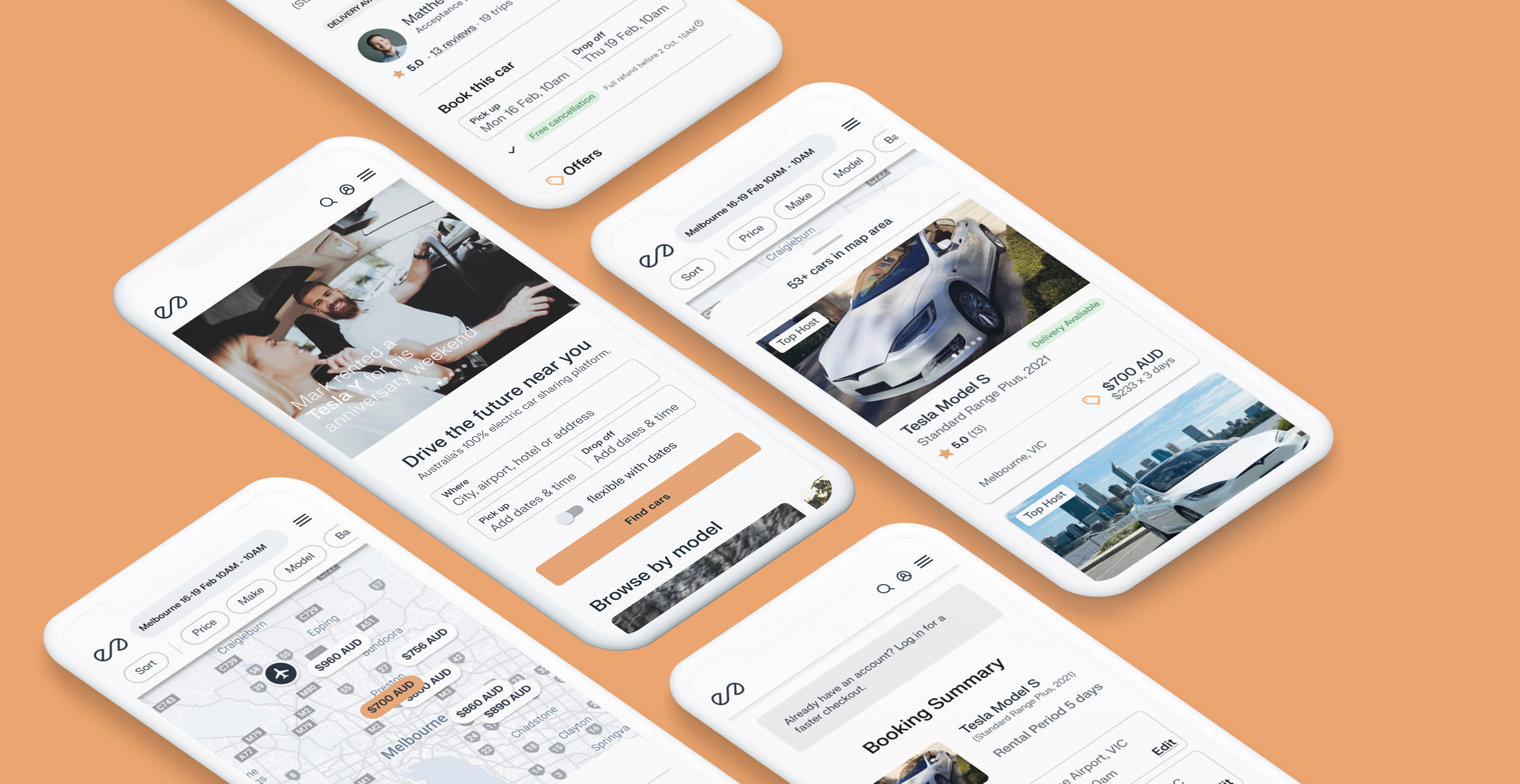
Evee, Australia’s only 100% electric car-sharing platform, faced a growing problem: users were dropping off during the rental booking flow, leading to a low 2.24% conversion rate.
Our design challenge: Increase conversions and reduce cart abandonment.
Discovery:
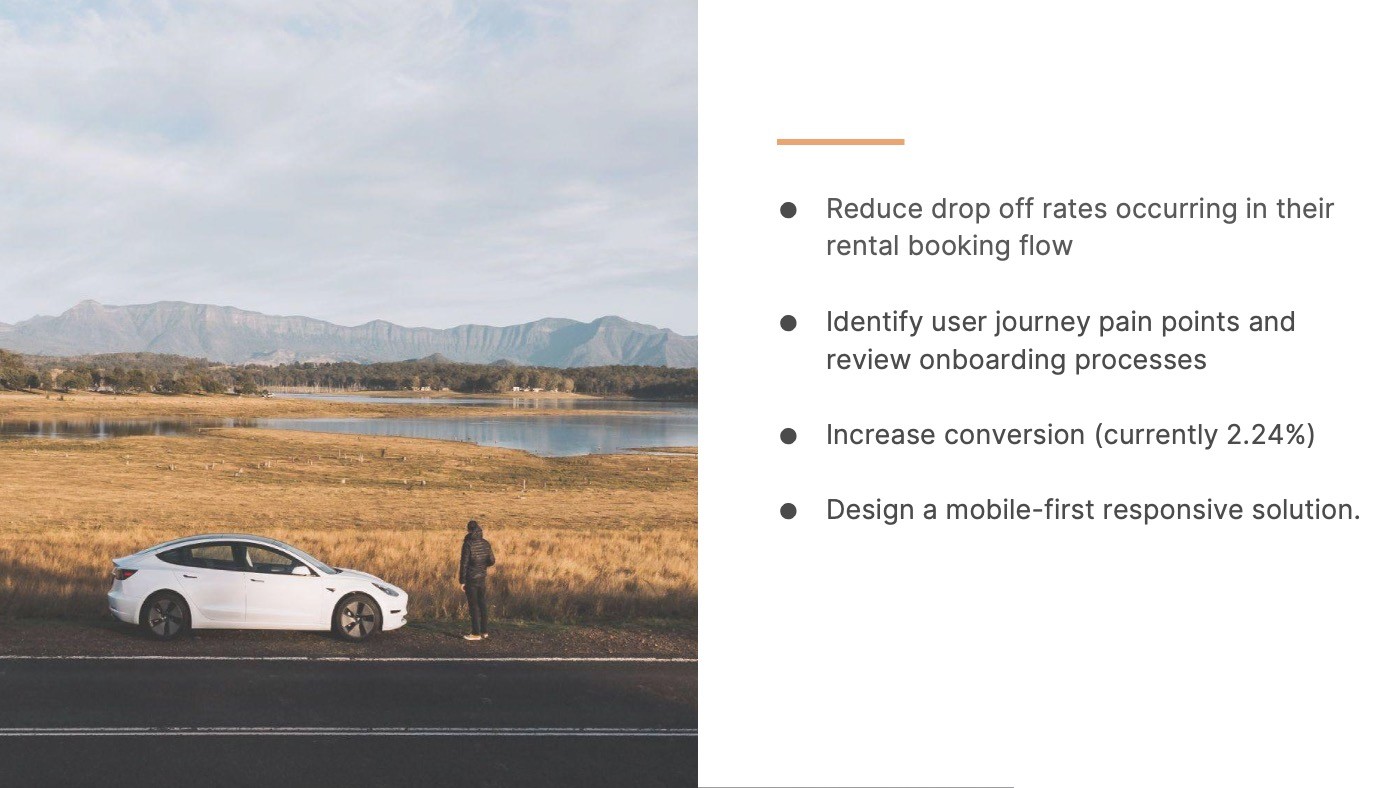
The most common user was first-time EV users, whose purpose of hiring through Evee was to get a taste of EV ownership. To understand the experience new EV users face, we performed a contextual enquiry of hiring an EV ourselves and used our experience to influence our design decisions.
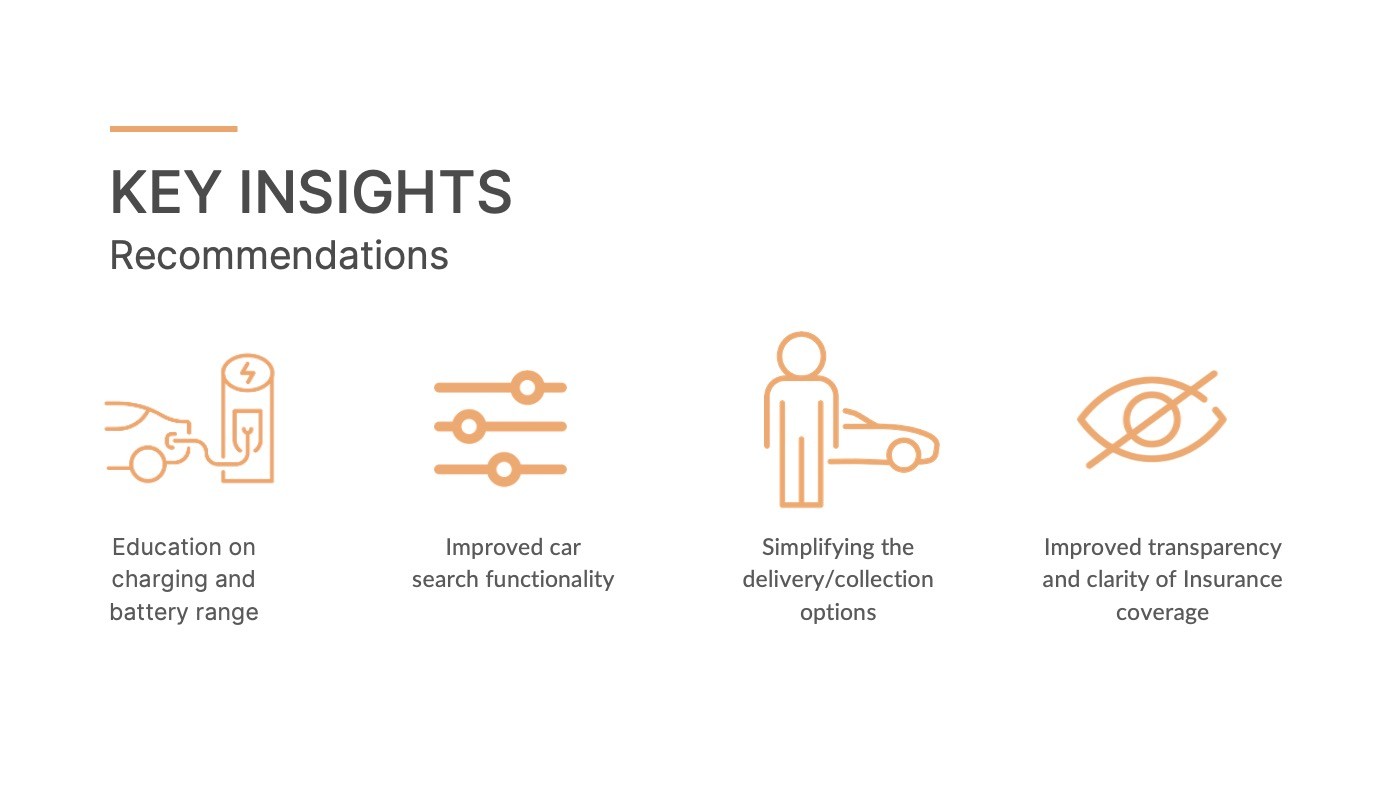
Additional research showed that users had many questions regarding using an EV, such as how to charge and the range of the battery. Our research also revealed that users hesitated to complete their bookings on Evee due to unclear insurance coverage, confusing delivery and collection options, and a complicated verification process.
Through usability audits, Google Analytics, user interviews, and competitor research, we found the biggest barrier wasn’t cost - it was uncertainty.
As part of a team of four, I helped map the user journey, sketch solutions, and co-design wireframes that focused on educating users on how to use an EV, improved car search functionality, increased clarity and transparency of insurance coverage, provided additional explanation regarding the delivery/collection options and simplified the verification steps.
Users needed their questions and concerns answered to gain confidence in the service, not hidden away on separate pages.
Outcome:
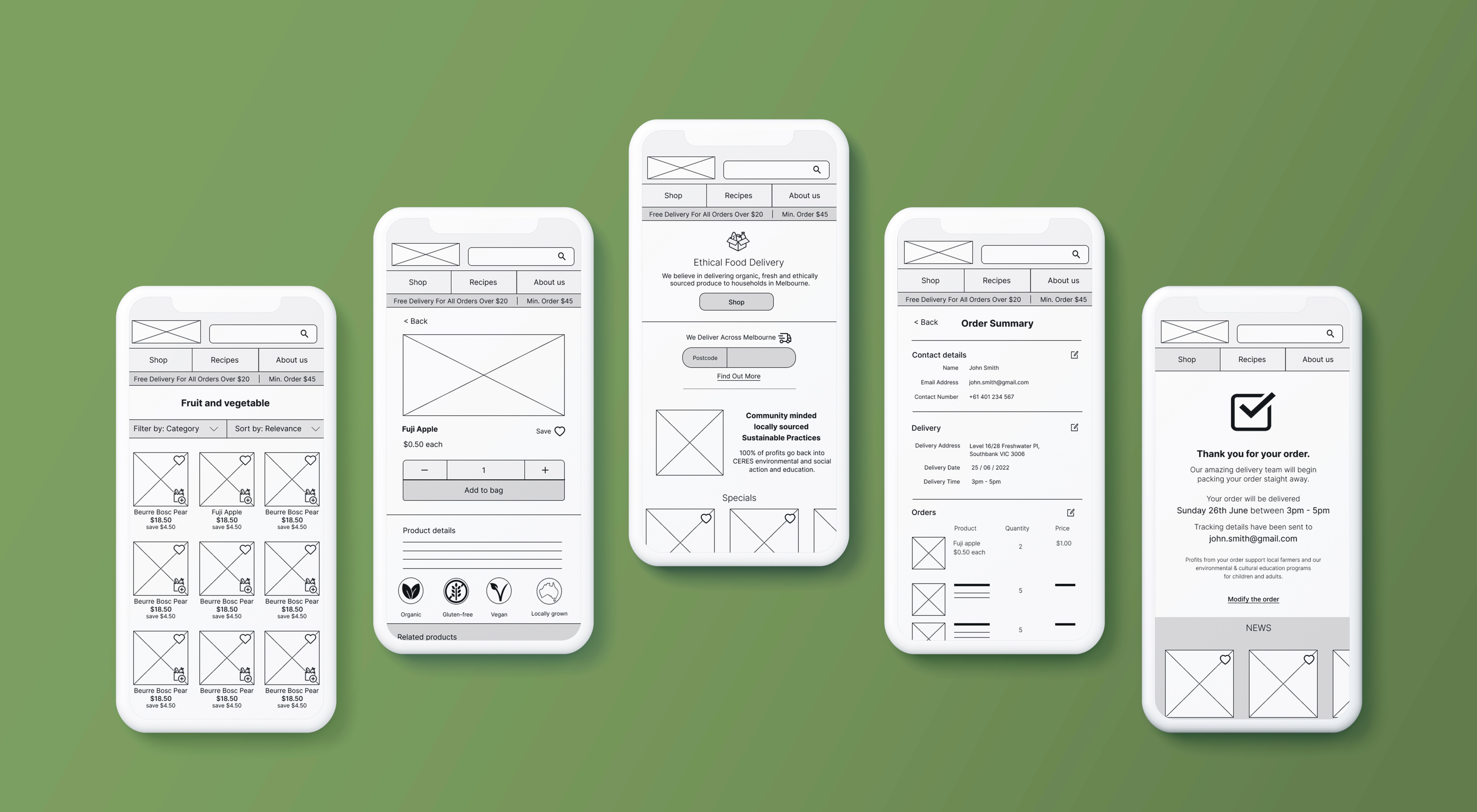
We redesigned Evee’s website and booking process, clearly explaining the process and ensuring common questions are addressed immediately. We created a consistent visual and written language of the car owners' rules, provided better clarity regarding delivery/collection options, improved transparency regarding insurance policies and updated site navigation throughout.
User testing revealed increased user confidence and higher task completion rates.
Our final recommendations gave Evee a clear roadmap to boost user confidence, reduce drop-offs, and accelerate the adoption of electric car sharing.

More Projects
UI / UX Design
Charging Up User Confidence
Evee is an online platform allowing electric car owners to rent their vehicles. Even though new users were highly motivated electric vehicle fans and already familiar with sharing economy practices, bookings were still being lost. The challenge was to turn hesitation into conversion.
Problem :
High drop-off rates during booking flow and low conversions
Impact :
65% of new users abandon their cart, and only 1.2% of all traffic has successful transactions
Solution :
Simplified messaging and clearer steps improved user trust and booking completion rates
Issue:
Evee, Australia’s only 100% electric car-sharing platform, faced a growing problem: users were dropping off during the rental booking flow, leading to a low 2.24% conversion rate.
Our design challenge: Increase conversions and reduce cart abandonment.
Discovery:
The most common user was first-time EV users, whose purpose of hiring through Evee was to get a taste of EV ownership. To understand the experience new EV users face, we performed a contextual enquiry of hiring an EV ourselves and used our experience to influence our design decisions.
Additional research showed that users had many questions regarding using an EV, such as how to charge and the range of the battery. Our research also revealed that users hesitated to complete their bookings on Evee due to unclear insurance coverage, confusing delivery and collection options, and a complicated verification process.
Through usability audits, Google Analytics, user interviews, and competitor research, we found the biggest barrier wasn’t cost - it was uncertainty.
As part of a team of four, I helped map the user journey, sketch solutions, and co-design wireframes that focused on educating users on how to use an EV, improved car search functionality, increased clarity and transparency of insurance coverage, provided additional explanation regarding the delivery/collection options and simplified the verification steps.
Users needed their questions and concerns answered to gain confidence in the service, not hidden away on separate pages.
Outcome:
We redesigned Evee’s website and booking process, clearly explaining the process and ensuring common questions are addressed immediately. We created a consistent visual and written language of the car owners' rules, provided better clarity regarding delivery/collection options, improved transparency regarding insurance policies and updated site navigation throughout.
User testing revealed increased user confidence and higher task completion rates.
Our final recommendations gave Evee a clear roadmap to boost user confidence, reduce drop-offs, and accelerate the adoption of electric car sharing.
More Projects
UI / UX Design
Charging Up User Confidence
Evee is an online platform allowing electric car owners to rent their vehicles. Even though new users were highly motivated electric vehicle fans and already familiar with sharing economy practices, bookings were still being lost. The challenge was to turn hesitation into conversion.
Problem :
High drop-off rates during booking flow and low conversions
Impact :
65% of new users abandon their cart, and only 1.2% of all traffic has successful transactions
Solution :
Simplified messaging and clearer steps improved user trust and booking completion rates
Issue:
Evee, Australia’s only 100% electric car-sharing platform, faced a growing problem: users were dropping off during the rental booking flow, leading to a low 2.24% conversion rate.
Our design challenge: Increase conversions and reduce cart abandonment.
Discovery:
The most common user was first-time EV users, whose purpose of hiring through Evee was to get a taste of EV ownership. To understand the experience new EV users face, we performed a contextual enquiry of hiring an EV ourselves and used our experience to influence our design decisions.
Additional research showed that users had many questions regarding using an EV, such as how to charge and the range of the battery. Our research also revealed that users hesitated to complete their bookings on Evee due to unclear insurance coverage, confusing delivery and collection options, and a complicated verification process.
Through usability audits, Google Analytics, user interviews, and competitor research, we found the biggest barrier wasn’t cost - it was uncertainty.
As part of a team of four, I helped map the user journey, sketch solutions, and co-design wireframes that focused on educating users on how to use an EV, improved car search functionality, increased clarity and transparency of insurance coverage, provided additional explanation regarding the delivery/collection options and simplified the verification steps.
Users needed their questions and concerns answered to gain confidence in the service, not hidden away on separate pages.
Outcome:
We redesigned Evee’s website and booking process, clearly explaining the process and ensuring common questions are addressed immediately. We created a consistent visual and written language of the car owners' rules, provided better clarity regarding delivery/collection options, improved transparency regarding insurance policies and updated site navigation throughout.
User testing revealed increased user confidence and higher task completion rates.
Our final recommendations gave Evee a clear roadmap to boost user confidence, reduce drop-offs, and accelerate the adoption of electric car sharing.